Copywriting
Recent projects I have completed in an effort to bridge the gap between my passion of writing creatively and responding to the need for copywriters in a marketing position.
Writing for Penn Medicine*
Conversation Starters: How Art Can Transform Medical Environments Whole Person Wellness Cultivated Through Art and Community: Penn Medicine's Dedication to Detail
Enchanted is probably the last word one would use to describe a medical facility, yet Perelman Center for Advanced Medicine defies that assumption. Scattered throughout the building’s lobby and halls are both massive and minute sculptures that transform the space into something akin to a contemporary museum. For a patient, a typical walk through the facility offers moments of awe and reflection amid an undeniably clinical environment.
The Perelman facility is an airy, bright, but still pointedly medical architecture. Its elevators are entirely see-through, allowing guests to watch the pulley system in action, and a lone piano sits in the lobby enticing passersby to play. In addition to these playful details, within the atrium is also the home to a collection of carefully curated art pieces, almost all of which were created by Philadelphia born or based artists. Gifted by Ray and Ruth Perelman and later opened in 2008, the detailing of the Perelman Center for Advanced Medicine’s interior was built with the intention of inspiring lightness and hope within those who enter.
Interplay: Art, Audience, Architecture:
Brought together by acclaimed curator Marsha Moss, the collection of sculptures and pieces of artwork are purposeful, holding individual spaces around the facility. Moss intends for the space to be populated by art created by Philadelphian artists, bringing together the local community and introducing visitors to the culture of the city. Whether they are vaulted from the ceiling or stand in the center of it all, these works of art position themselves amongst the busy and clinical atmosphere and demand attention and consideration from guests willing to take a second look.
One of the hardest pieces to miss is Donald Lipski’s Spilt Milk #99. Composed of glass, liquid, and metal, Spilt Milk hangs over the reception desk of the Perelman center like a halo, or a crown of thorns. His piece is playful, and invites inquisition due to its somewhat random nature. Milk in and of itself is medicinal and lifegiving. The nature of it being from mother to child, the strength it provides to bones. The importance of milk within the human body designates Lipski’s work as a purposeful and fitting piece for a medical environment.
On the second floor lobby hangs the Homologous Hope, by Mara G. Haseltine. Installed in 2014, Homologous Hope is a playful recreation of the BRCA 2 gene mutation, which is responsible for DNA repair in healthy cells. Haseltine constructed the structure with carbon fiber and colored LED lights, which blink from time to time and actually mimic the three stages of DNA repair that the BRCA 2 gene operates within. Her structure commands space within the lobby as it dangles over the elevators to the second floor lobby, twisting and squiggling as if it is suspended in motion. Whimsical and white, Homologous Hope is by far the most eye-catching spectacle of the facility, and presents a dreamy and lighthearted approach to healing.
At the landing of the second floor elevators sit Jun Kaneko’s Dangos. Named after the Japanese dumpling, Dangos are multicolored free standing ceramic sculptures that range in width and height. Kaneko displays these ceramic globes, pillars, and monoliths in a collection he has cultivated since 1983, recognized as having some of the biggest free standing ceramic sculptures in the world.
Just as rounded and playful as Kaneko’s Dangos is Mary Ann Baker’s sculpture Butterfly Delight. Not at all unlike its title, Baker’s piece arches and leans into itself as a reminder of sunshine and the beauty of nature. Reflections from carved butterfly silhouettes lay swirls and the outlines of wings on the floor surrounding the piece, and its immersive placement allows guests to get a full 360 view as they walk around it.
Fritz Dietel’s Cradle is fixed perfectly in front of the entrance to the center’s south pavilion. It is composed of Spanish Cedar wood, white oak, and copper bands, making it another organically sourced and ‘recycled’ piece of art. Cradle presents visually as both a golden cradle and basket, its hollowed structure representing the protecting and holding of things.
The Dutch House Paint Mural, painted by local Temple University professor Odili Donald Odita, is an undeniably colorful and light catching piece that stretches the entirety of one of the Pavilion’s halls. Dutch house paint, picked in pastel yet eye-catching hues, is used for the mural with the sole purpose of it being easily repainted and revived to its bright originality if accidentally scuffed or chipped. The concept of this piece being repairable and ever existing in the space allows it to be easily absorbed and enjoyed as patients and staff follow it down the hall.
In contrast to the typically high-stress, clinical atmosphere of hospitals, the presence of non-denominational and accessible spaces for spiritual grounding and emotional release is essential to the concept of whole-person wellness. The Griswold Family Interfaith Chapel and Reflection Room offers such a sanctuary—a place where patients, families, and friends can decompress beneath the warmth of wooden walls and a serene floral mural. Having a quiet, welcoming space to sit with grief, process difficult news, or simply breathe can sometimes be one of the greatest gifts the hospital can offer.
John H. Glick, MD by Nelson Shanks is a heartfelt piece from the accredited portraitist Nelson Shanks, who has done some of the best contemporary realism portraits of high profile figures in politics, royalty, medicine, and entertainment. Including his portrait of Ruth and Raymond Perelman, Shanks’ portraits of important figureheads at PennMed are the shining stars of the facility’s collection. Shanks’ personal respect and affection for the figures he paints are prevalent in his work, and the care that is taken in each brushstroke represents his admiration for the positive impact his figures have made on their respective communities and the world.
Similarly to Homogulous Hope in the lobby of the Perelman, Tree of Life by Maya Lin is another large scale piece of artwork that presents as a massive, spiraling, white glass tree. Structurally, the piece surpasses one single floor and stretches out to the second, allowing for a 360 view as well as a view from above and below. Akin to its name, Tree of Life symbolically portrays the stages of living and growing throughout one’s life, as well as healing and ‘branching out’ as time goes on. Lin’s use of glass bulbs makes the statue breakable, but its vulnerability is also reflective of its vulnerability and beauty.
*Link to draft with corresponding photos imbedded in title
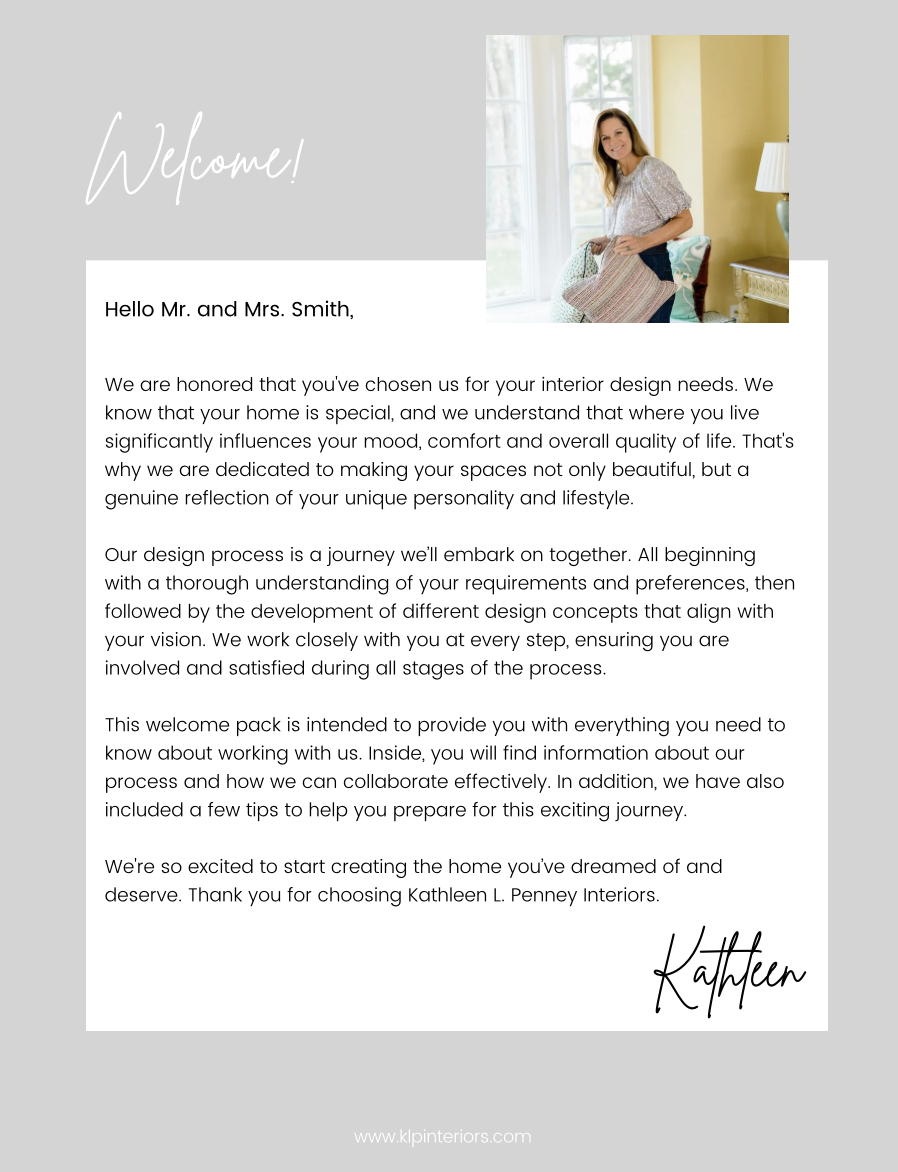
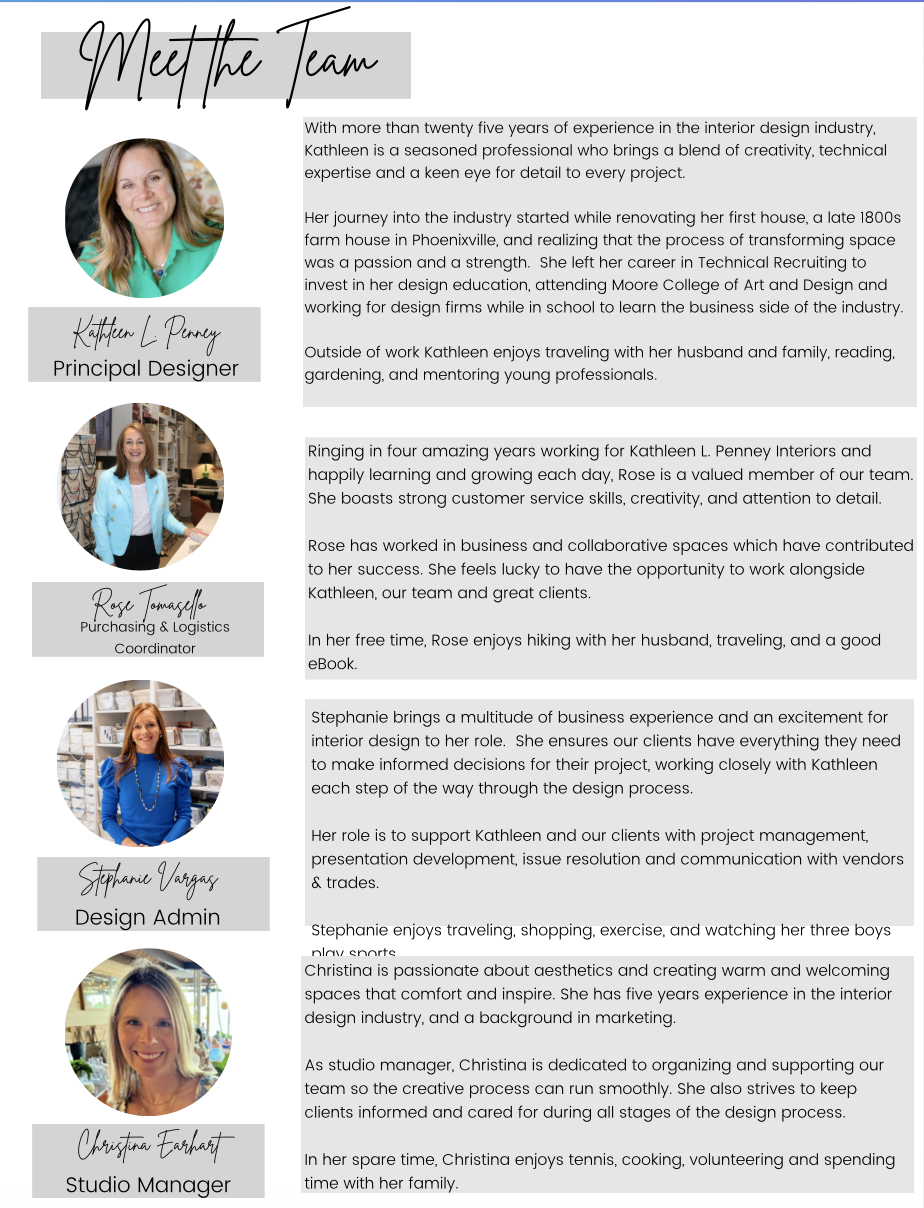
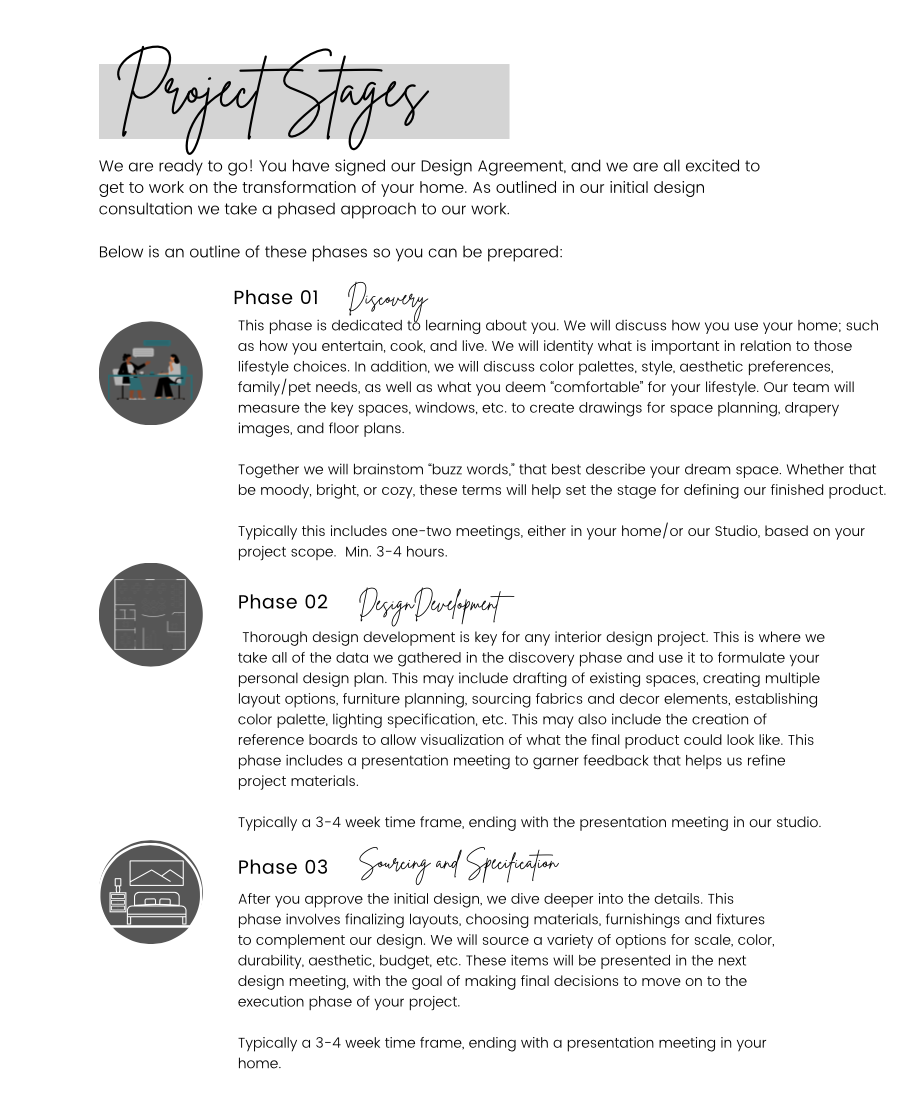
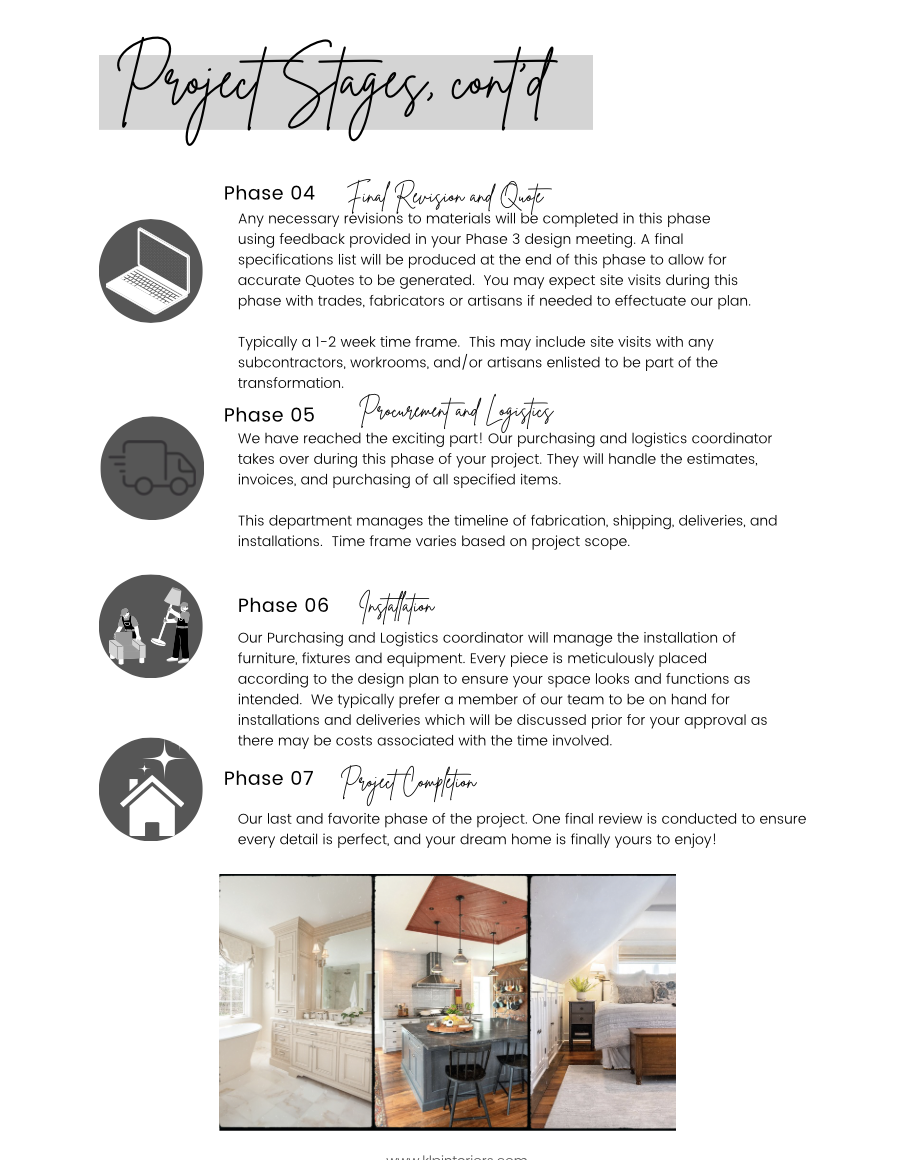
Copywriting for Kathleen L Penney Interiors: Welcome Packet for New Clientele